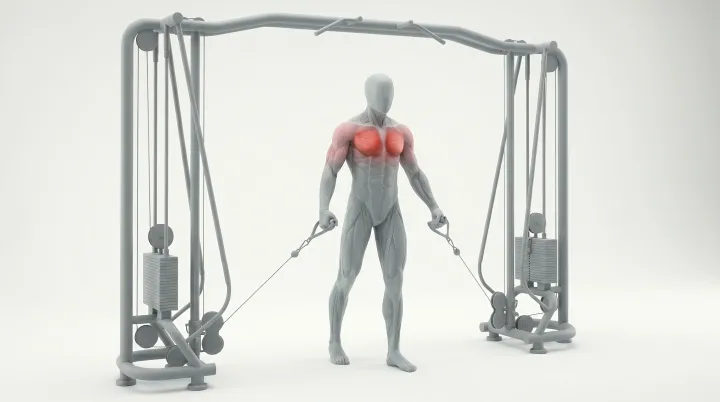
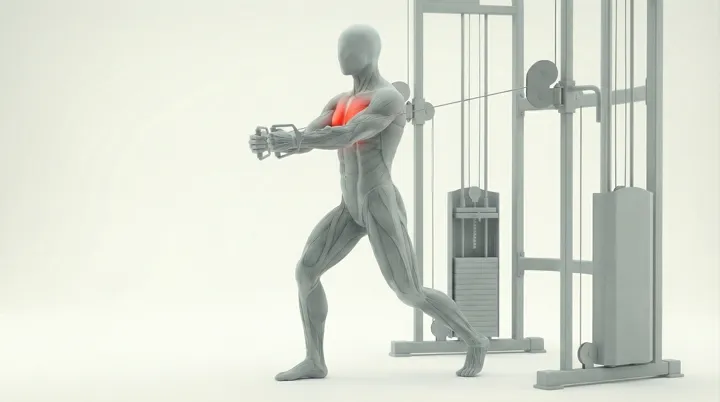
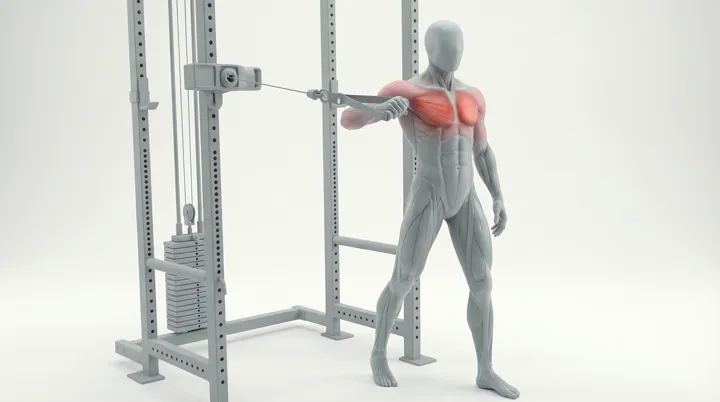
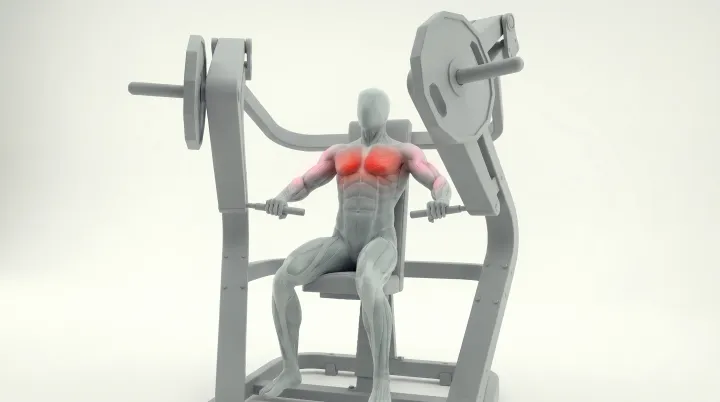
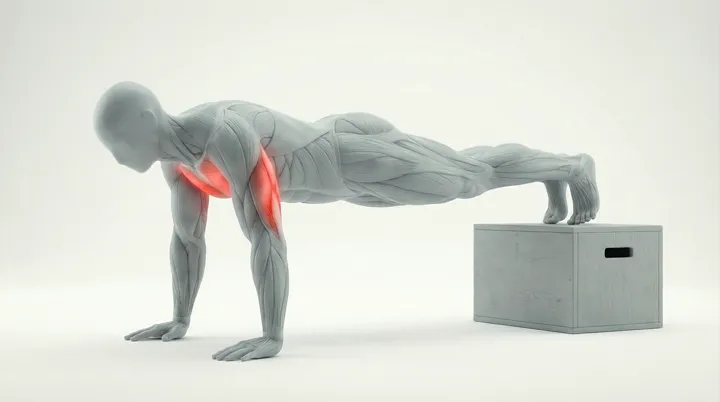
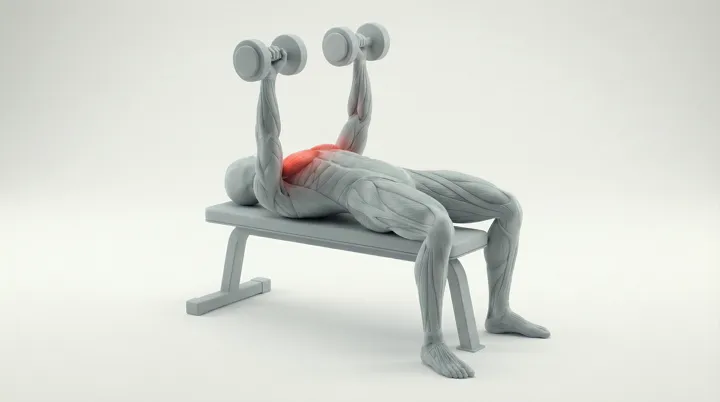
The Cable Low-to-High Fly is a intermediate-friendly cable strength exercise that targets the chest, with the shoulders and triceps working alongside. Here's how to do it right, and what to stop doing.
Primary musclesChest
Secondary musclesShoulders, Triceps
EquipmentCable
LevelIntermediate
TypeStrength
3D demo in the EGON app
01 Execution
How to do the Cable Low-to-High Fly
Set both pulleys to their lowest position and select a light load on each side.
Grip a handle in each hand with palms turned slightly upward and step forward into a staggered stance.
Stand tall, brace your abdominals, and keep a soft bend in both elbows.
Drive both hands up and inward on a forty-five degree line until they meet at chest or face height.
Pause briefly at the top and hold the chest contraction without clashing the handles.
Lower your arms back down and out under control, then repeat for the prescribed reps.
02 The payoff
Why it earns its spot
Loads the upper chest without an incline bench, which is useful in cable-only gym setups.
Keeps constant cable tension through an arc that ends in full pectoral shortening.
Trains trunk bracing alongside the chest because the stance must resist a forward pull.
03 Don't do this
Common mistakes
Leaning back to help the hands travel upward turns the lift into a shoulder raise and takes the chest out of it.
Letting the elbows flex and extend converts the fly into an incline press and moves load to the triceps.
Driving too high with a heavy stack overloads the front of the shoulder joint and provokes pain there.
Losing the abdominal brace lets the lower back arch, which shortens the working range and stresses the spine.
EGON Put it on record
Track it in EGON.
Log every set of the Cable Low-to-High Fly, get your PRs detected automatically, earn aura for the work, and climb five leagues of statues, from Stone to Ego.